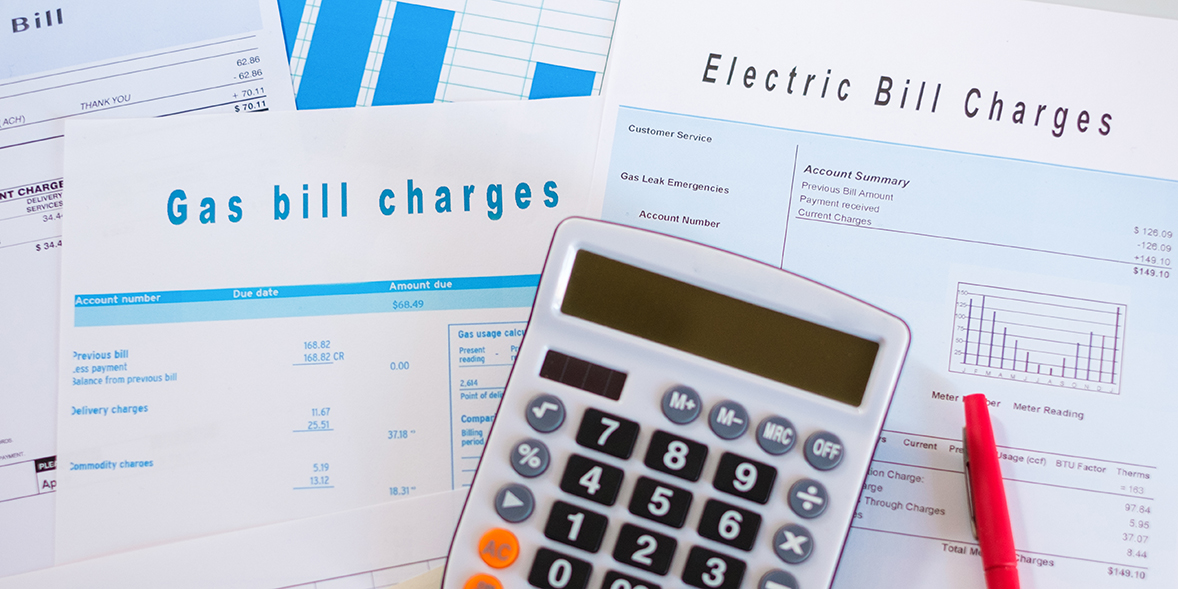
With the cost of energy bills sky rocketing over the course of the past twelve months (and predicted to continue rising into 2023) a lot of people & businesses will be looking at their bills increasing dramatically in the upcoming months and at times like these everyone will be looking at ways to alleviate these increased costs.
If you are a sole trader or a director of a limited company you may be able to at least use the increase in energy prices to your advantage a little by claiming for at the very least a portion of the bills and offsetting your income and could potentially bring with it an income tax refund.
Are Energy Bills An Allowable Expense?
The short answer is yes, however how much of the energy bills you can claim is largely dependant on the type of premises & how much of your work is carried out there.
For instance if you operate and run your business exclusively out of premises for that purpose you will be able to claim the entire cost of your energy bills used. You simply tot up your electricity and gas bills over the tax year using your bank records or supplier bills and enter the total in your tax return. Job done.
However if you run your business from a room in your home and the energy bills include both business and personal use you will only be able to claim for a portion of your bills. You will need to reliably and accurately work out the proportion of business use. So, for example, if you use one room in your five-roomed house for business, but only for a third of each day, divide your utility bill by five and then divide by three. This is the amount that you can justifiably claim for.
To make your life easier, alternatively, you can claim a flat rate amount under simplified expenses (you must work for 25 hours or more a month from home). Government website GOV.uk features an online tool that you can use to check if claiming simplified expenses would leave your sole trader business better off. The flat rate ranges from £10-£26 a month.
Can I Claim For My Water Bills?
When it comes to water bills it can be a tricky subject and can be confusing & misleading. According to HMRC, domestic property water rates are not allowable, because they would apply to the property whether or not the sole trader was working from home or not.
Moreover: “Water expenses can only be considered an allowable expense if the nature of the trade meant the sole trader was using more water and so incurring more expense as a result of the trade or profession. For instance a hairdresser/barber would be using more water in order to carry out their profession therefor incurring more expense and thus would be allowable.
How About Broadband?
If you work from your home you similar to energy bills you will only be able to claim for a portion as explained on government website GOV.uk: “You may be able to claim a proportion of your costs for internet and telephone use”, as a long as you “find a reasonable method of dividing your costs, for example, by the number of rooms you use for business or the amount of time you spend working from home.” Alternatively, you could claim simplified expenses.
If you install broadband and a telephone line in commercial premises, then, as a sole trader, obviously, you can claim the full amount as an allowable expense, as long as you don’t live on the premises and the broadband isn’t also for personal use.
Energy Bills: How To Claim
As with other allowable expenses it is vital that you keep good records when it comes to your tax return (I have made a list of 5 Important Record Keeping Tips for Small Businesses here) and makes completing your Self Assessment much simpler and quicker. And, you won’t forget any expenses for which you could otherwise claim.
When completing your Self Assessment tax return, you add up and enter all of your allowable expenses for the tax year, which is subtracted from your profits to find out your Income Tax liability. You don’t have to provide proof of your expenses, however, you should keep invoices and sales receipts safe, because HMRC can request them.
You must ensure that your financial records and tax returns are accurate. If your tax returns contain a mistake, HMRC can charge a penalty if the error is the result of a lack of reasonable care, deliberate or deliberate and you try to hide it. According to HMRC: “The more serious the reason, the higher the maximum penalty can be.”
Alternatively if you would like to take advantage of my tax return service I will ensure that all the allowable expenses are claimed for.
 devlin-whitworth.co.uk